

Gaming Club casino Plinko game
Introduction
I have reviewed a long list of online casino formats over the years, and Plinko remains one of the most deceptive in the best and worst sense of that word. At first glance, it looks almost too simple to deserve serious analysis: you choose a stake, set a risk level, drop a ball, and watch it bounce through a field of pins until it lands in a payout slot. That surface simplicity is exactly why Gaming club casino Plinko attracts attention so quickly. The rules are easy to grasp in seconds, yet the actual session experience can vary dramatically depending on settings, pace, and expectations. For a closer look at the games library, Gaming Club Casino blackjack guide before choosing a real money casino sorts the titles by theme and pace.
For players in New Zealand who are browsing Gaming club casino for something outside the standard reel-based routine, Plinko often stands out because it replaces familiar slot symbols and paylines with visible motion and immediate outcomes. You can literally watch the result develop in front of you, even though the underlying mathematics still belong to the world of random gambling. That creates a very specific kind of tension. The interface feels transparent, but the result remains uncertain until the ball settles.
In this review, I want to stay focused on the practical side of Plinko: how it works, why it feels engaging, where the real risk sits, and what a player should understand before starting. This is not a broad casino overview. It is a close look at what Gamingclub casino Plinko actually offers as a game format, and what that means during a real-money session.
What Plinko is and why it draws so much player attention
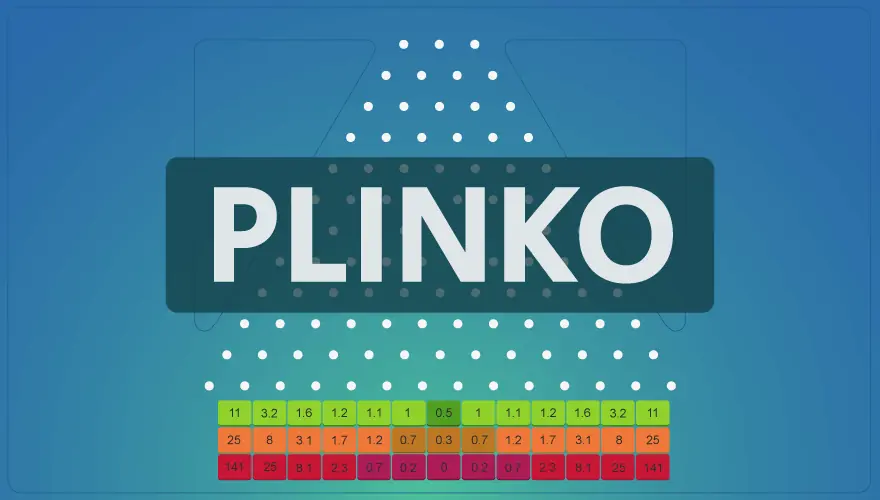
Plinko is a chance-based casino game built around a vertical board filled with pegs. A ball drops from the top, collides with those pegs on the way down, and eventually lands in one of several slots at the bottom. Each slot carries a multiplier. Low multipliers tend to sit near the center, while the rare high multipliers usually appear at the edges. That arrangement is not accidental. It shapes both the mathematics of the game and the emotional rhythm of every round.
The reason Plinko became so noticeable is not just because it is easy to understand. Plenty of casino games are simple. The difference here is visual cause and effect. Players see movement, deflection, near misses, and edge outcomes in real time. Even though the result is still governed by random number generation, the drop creates a sense of physical drama that a standard instant result does not. In practical terms, this makes Plinko feel more interactive than many fast casino games, even when the player is only adjusting stake and risk settings.
Another reason for its visibility is that it compresses decision-making into a few clear variables. You are not learning paylines, high value casino bonuses at Gaming Club Casino rounds, card values, or betting grids. You are mostly choosing how aggressively you want the session to behave. That clarity is part of the appeal. A player can move from cautious low-risk drops to high-risk attempts within moments, and the game immediately feels different.
One observation I keep returning to is this: Plinko often gives players the illusion of reading momentum, even though each drop is independent. That is one of the format’s most interesting traits. Because you can watch the ball bounce left and right, the mind starts looking for patterns. The board invites interpretation. The mathematics does not.
How the Plinko system works in practice
At Gaming club casino, Plinko is typically structured around a few core controls: bet size, number of rows, and risk level. Some versions may vary slightly, but the central logic remains the same. You place a stake, release a ball, and the board determines the final landing position. The payout is calculated by multiplying your stake by the value shown in the slot where the ball ends up.
What matters most is that the board is not a skill board. It may look physical, but it is not a test of timing or precision. You are not aiming the ball with meaningful manual control. The drop is a visual representation of a random outcome. That distinction is important because newcomers sometimes mistake visual motion for strategic influence. In reality, your choices affect the payout profile, not the path of an individual ball after release.
The row count changes the length and spread of the descent. More rows usually mean more possible final positions and a broader multiplier distribution. Fewer rows tend to compress the range. This affects the feel of the session. A shorter board can seem more straightforward, while a taller board often creates more suspense because the descent lasts longer and the edge multipliers become more dramatic.
Risk level is where the format becomes genuinely different from what it first appears to be. In low-risk mode, the multiplier map is usually flatter. That means more frequent modest returns and fewer severe swings. In high-risk mode, the center often pays less and the extreme edges pay much more, but those top outcomes become significantly rarer. The game does not simply become “better” or “worse” with risk adjustment. It becomes a different experience.
| Setting | What changes | What it means for the player |
|---|---|---|
| Bet size | The value of each drop | Directly affects session cost and emotional pressure |
| Rows | Board depth and outcome spread | Can alter suspense, distribution, and payout range |
| Risk level | Multiplier distribution | Changes the balance between frequent small returns and rare large hits |
| Auto-play pace | Number of drops over time | Can accelerate bankroll swings faster than many players expect |
That last point deserves emphasis. In Plinko, speed matters. Because each round resolves quickly, especially in auto mode, a player can go through a large number of drops in a short session. This can make the game feel light and casual while quietly increasing exposure. I have seen this happen often with fast-result formats: the interface feels clean, the actions are repetitive, and the bankroll moves faster than the player emotionally registers.
Why the game feels exciting and how its pace shapes the session
Plinko creates interest through a combination of visible randomness and compressed anticipation. Every drop is short, but not instant. That gap between release and landing is where the game earns its attention. You are not staring at spinning reels waiting for symbols to stop. You are following a moving object that appears to flirt with different outcomes on the way down. It is a small design detail with a big psychological effect.
In a practical session, the rhythm depends on how you play it. Manual drops produce a more deliberate experience. You have a pause between outcomes, time to review the previous result, and a better chance of noticing whether the chosen settings still make sense for your bankroll. Auto-play changes everything. The same game can go from mildly engaging to mechanically relentless in under a minute.
This is one of the format’s strongest and most misunderstood qualities. Plinko can feel almost meditative at low stakes and manual pace, then suddenly feel sharp and punishing when high-risk settings are combined with rapid-fire drops. The board does not change, but the emotional profile does. That is why two players can describe the same title in completely different terms.
A second observation worth remembering: Plinko often feels fairer than it is generous. Players can see the structure, understand the multiplier layout, and accept the logic of edge rewards being rare. That transparency helps the game earn trust. But visible structure should not be confused with favorable short-term results. The board explains the possibility space. It does not promise balance within your session.
How risky Plinko really is and who tends to enjoy it
Plinko can range from relatively controlled to highly aggressive depending on the selected setup. That flexibility is part of its strength, but it also creates confusion. Some players assume the game itself is either safe or dangerous by nature. I would frame it differently. Plinko is a format with adjustable volatility, and the player has a direct hand in choosing how sharp the swings may become.
Low-risk configurations usually suit players who want frequent feedback and longer sessions. Returns may come more often, but they are commonly small and may still sit below the original stake. That means the session can feel active without being truly profitable in the short term. High-risk configurations are built for the opposite emotional profile. Long stretches of weak outcomes can be interrupted by a rare large multiplier that changes the whole graph of results.
Who does this suit? In my view, Plinko works best for players who enjoy fast, transparent chance games and do not need narrative layers such as bonus rounds, symbols, or themed progression. It can also appeal to analytical players who like adjusting settings and observing how the distribution changes over time. On the other hand, players who prefer strategic depth, slower decision cycles, or feature-rich entertainment may find it too narrow after the novelty wears off.
It may also disappoint players who chase consistency. Even low-risk Plinko is still a gambling product with random outcomes and house edge built into the model. The difference is not whether uncertainty exists, but how it is distributed across the session.
What to understand about probabilities, distribution, and realistic outcomes
The central mathematical truth of Plinko is simple: the most eye-catching multipliers are not where most outcomes will land. The board is typically shaped so that central slots are more likely than the extreme edges. This mirrors the way repeated left-right deflections tend to cluster around the middle of a distribution. In visual terms, the board tempts the eye toward the edges. In probability terms, the center does most of the work.
That has two practical consequences. First, players should not evaluate the game by looking only at the maximum multiplier. A headline number can be technically real and still statistically remote. Second, short sessions can be wildly misleading. A player who hits an edge multiplier early may see Plinko as highly rewarding. Another player using the same settings may experience a long sequence of center-heavy results and reach the opposite conclusion.
Here is the key point: Plinko is a distribution game more than a progression game. Each drop stands alone. There is no evolving feature cycle that “builds toward” something in the way some slots do. Your session story is created by variance, not by advancement.
Do not confuse visible movement with improved odds. Watching the ball bounce makes the result feel traceable, but the expected return is still determined by the game model.
Do not judge high-risk mode by a handful of drops. The rare large multipliers are designed to be infrequent, so short samples often show only the downside of that setting.
Do not let quick rounds hide total spend. A low individual stake can still become expensive when dozens or hundreds of drops happen quickly.
A third observation that separates Plinko from many standard formats is this: the game can produce emotional near misses without using traditional reel psychology. A ball that bounces toward an edge and then returns inward creates the same tension as a slot almost landing a premium symbol, but through motion rather than icon alignment. For some players, that makes the suspense feel more organic. For others, it becomes repetitive faster.
How Plinko differs from slots and other common casino formats
The easiest comparison is with online slots, because that is where many players arrive from. Slots usually build engagement through themes, symbol combinations, bonus triggers, free spins, multipliers, expanding reels, or other layered systems. Plinko strips most of that away. It offers almost no thematic storytelling and very little mechanical decoration. What remains is a distilled wager-to-outcome loop.
That makes Plinko more transparent, but also less varied in texture. A slot can entertain even during a losing stretch because the feature cycle itself creates anticipation. Plinko has no such cushion. If the distribution is not treating you well, you feel it immediately. There is less noise around the result.
Compared with roulette details, Plinko is also quite different. It does not offer the strategic decisions of blackjack, the pacing of baccarat, or the betting map complexity of roulette. It is closer to an instant probability engine with a visual shell. That can be a strength for players who want clarity, but a limitation for those who want meaningful tactical input.
| Format | Main appeal | What Plinko does differently |
|---|---|---|
| Classic slots | Features, themes, bonus rounds | Focuses on direct outcome distribution instead of layered content |
| Roulette | Betting variety and table logic | Uses a single-drop visual path rather than a betting grid |
| Crash-style games | Timing and cash-out tension | Removes timing decisions and leaves only setup-based exposure |
| Blackjack | Decision-making and basic strategy | Offers almost no tactical play once settings are chosen |
That is why I would not describe Gaming club casino Plinko as a replacement for slots. It serves a different mood. It is for players who want cleaner feedback, faster cycles, and fewer moving parts between stake and result.
Practical strengths and limitations of the format
Plinko’s biggest strength is accessibility. A new player can understand the board in moments. There is no long learning curve, no paytable to decode, and no hidden feature sequence to memorise. That makes it one of the easiest casino products to test in demo mode or with cautious stakes.
Its second major strength is configurability. Risk level and board depth can significantly change the feel of the session without making the interface complicated. This gives the player more control over the style of exposure than many simple casino formats provide.
The third strength is pacing flexibility. You can play slowly and treat each drop as a discrete event, or you can accelerate the session. That adaptability is useful, but it cuts both ways. What helps one player stay engaged can help another player lose track of spend.
As for limitations, the most obvious is repetition. Once the novelty of the bouncing path fades, some players realise the loop is extremely narrow. There are no surprise feature layers waiting underneath. If you need evolving content, Plinko may feel thin after a short period.
Another limitation is the mismatch between visible excitement and actual return frequency. The ball’s movement can make many rounds feel dramatic even when the financial outcome is modest or negative. This is not unique to Plinko, but the format expresses it very clearly.
Strong point: easy to learn and easy to compare across risk settings.
Strong point: fast feedback with minimal interface clutter.
Weak point: can become repetitive for players who need features or narrative variety.
Weak point: quick rounds can mask bankroll erosion, especially in auto-play.
What I would check before launching Gaming club casino Plinko
Before starting a session, I would look at four things. First, the available risk modes. This determines the character of the session more than any other setting. If you do not consciously choose your volatility profile, the game can feel harsher or flatter than expected.
Second, I would check the row configuration and multiplier map. A board with a dramatic edge spread may look appealing, but it can produce long stretches of ordinary outcomes before anything notable happens. That is not a flaw. It is the design. The mistake is entering without understanding that design.
Third, I would decide in advance whether the session is manual or automated. This sounds minor, but it is not. Manual play gives you friction. Friction is useful in gambling because it creates moments to reassess. Auto-play removes that pause and can turn a short experiment into a long sequence almost by accident.
Fourth, I would set a clear expectation for what counts as a successful session. In Plinko, chasing a specific multiplier can become irrational very quickly because the board constantly displays what is possible, not what is likely. A practical goal might be testing settings, limiting total drops, or playing within a fixed budget rather than hunting an edge result.
If Gamingclub casino offers a demo version of Plinko, that is worth using for one reason above all others: not to “learn how to win,” but to learn how the pace affects your decisions. Demo play is most useful here as a rhythm test.
Final verdict on Gaming club casino Plinko
Gaming club casino Plinko offers a clean, fast, and visually readable gambling format built around one central idea: a random drop with a transparent payout map. Its appeal is real. The rules are simple, the session starts instantly, and the tension of watching the ball descend gives each round more personality than a plain instant-result bet.
Its strongest qualities are clarity, speed, and adjustable session style. A player can choose a calmer setup with more frequent modest returns or a sharper profile with rarer but more dramatic multipliers. That flexibility is not cosmetic. It fundamentally changes how the game feels and who will enjoy it.
The caution point is equally clear. Plinko may look harmless because the interface is minimal, but it can move quickly, especially in auto-play and high-risk mode. The visible path of the ball can also create a false sense of readable momentum. In reality, each drop remains an independent random event, and the most attractive multipliers are usually the least common outcomes on the board.
Who is this for? I would recommend Plinko to players who value directness, fast rounds, and a stripped-back chance format without the extra layers of slots or table strategy. I would not recommend it to players who need feature variety, tactical decision-making, or a slower, more deliberate session structure.
In short, Gaming club casino Plinko is worth trying if you want a game that looks simple but reveals its real character through pacing, distribution, and risk selection. What it genuinely offers is not complexity, but clarity under tension. For the right player, that is enough. For the wrong one, it can feel repetitive or too swing-heavy very quickly.
FAQ
How does the Plinko game round work on Gaming Club?
A round starts when the ball is released from the drop point. Each bounce moves the ball toward the scoring grid, and the final zone decides the multiplier for that round.
What should be checked before the first ball is dropped?
Confirm the stake and the selected risk level shown for the Plinko session. Also check whether the game is in demo mode or real-money play so the results match the session type.
Can Plinko be played in demo mode, and how is it different from real-money play?
Demo mode lets players test the gameplay and multiplier outcomes without wagering real funds. Real-money play uses the same Plinko mechanics, but stakes apply and winnings are tied to the account.
Is Plinko played only as a single game, or is it part of an online casino games lobby?
Plinko is available as a standalone game within the casino games section. The game lobby layout may also group it with other casino games for faster navigation and quick real-money play.
What happens if a bonus code is entered while launching Plinko?
Bonus codes are typically used in the promo area linked to eligible offers, not inside a running Plinko round. If a code is rejected, the Plinko game itself usually remains accessible, but the promo conditions may not apply.
What does multiplier risk level mean in Plinko?
Risk level affects how the game places the scoring zones and the resulting multiplier distribution for rounds. Higher-risk setups can produce more extreme multiplier outcomes, alongside more frequent low returns.
When playing Plinko on a mobile phone, which mode performs best for quick starts?
Mobile play works best when the game is opened directly in the browser or through the casino mobile casino app if it is available. Using a stable connection and avoiding background tabs helps keep ball-drop animations smooth.
How should returning players handle outdated settings from a previous session?
After logging back in, review the stake, risk level, and mode selection before dropping a new ball. Some sessions may reset choices, especially after browser refreshes or device changes.
What is the common beginner mistake in Plinko that leads to unexpected results?
Many players set a higher stake or choose a higher risk level without noticing the current selections. Another frequent issue is forgetting to confirm whether the session is in demo mode or real-money play.
If a deposit or withdrawal is needed to play real-money Plinko, what account step comes first?
Withdrawals follow the account verification steps shown in the withdrawal area, and any limits displayed there apply to the available payout methods. Deposit funds through the cashier before starting real-money play.
What should be done when a player cannot access Plinko due to a working or backup mirror issue?
Use the working mirror provided through the site access options if the game does not open. If access still fails, clearing browser cache, trying a different device, or contacting support from the account area can help route the issue correctly.